What if the most powerful driver of philanthropy isn't strategy — but gratitude?
In our work, we talk a lot about pipelines, portfolios, and performance. But in healthcare, I've seen something else drive giving — gratitude that forms in moments of care. As a former PICU nurse and later a healthcare philanthropy leader, I've watched families choose to give not because they were asked, but because they felt seen, supported, and not alone.
That experience changed how I practice fundraising.
I stopped treating gratitude as something that happens after a gift and started using it as the starting point for every relationship. When gratitude leads, trust follows. And when trust is present, philanthropy is no longer something we push — it's something that emerges.
Gratitude: The Emotional Root of Giving
Early in my nursing career, I stood at the edge of a hospital bed, looking down at a three-year-old child we could not save.
Months later, I met with the family again. There was no agenda. They spoke about how they were cared for — the nurses who stayed, the physician who explained every step, the feeling that they were not alone.
At the end of the conversation, the father said, "We want to do something so another family feels what we felt — not the loss, but the care."
That was the moment gratitude became philanthropy.
They named a grieving room in the hospital.
This pattern is familiar to many of us. Donors rarely give because of logic alone — they give because they felt seen, connected, and meaningful. Gratitude is the bridge between experience and action. It turns a transaction into a relationship.
Why Traditional Fundraising Falls Short
Our field has become highly sophisticated — and that's a strength. But it can also pull us toward urgency over meaning and outcomes over relationships.
In healthcare, this shows up as tension between clinical care and philanthropy. When gratitude is reduced to a transaction, donors sense it. Physicians hesitate. Fundraisers feel pressure to move too quickly.
The result is short-term gain at the expense of long-term trust.
Gratitude isn't a soft skill. It's part of the infrastructure that makes sustainable philanthropy possible.
The Grace & Gratitude Fundraising Model™
To make this practical, I use a five-step framework:
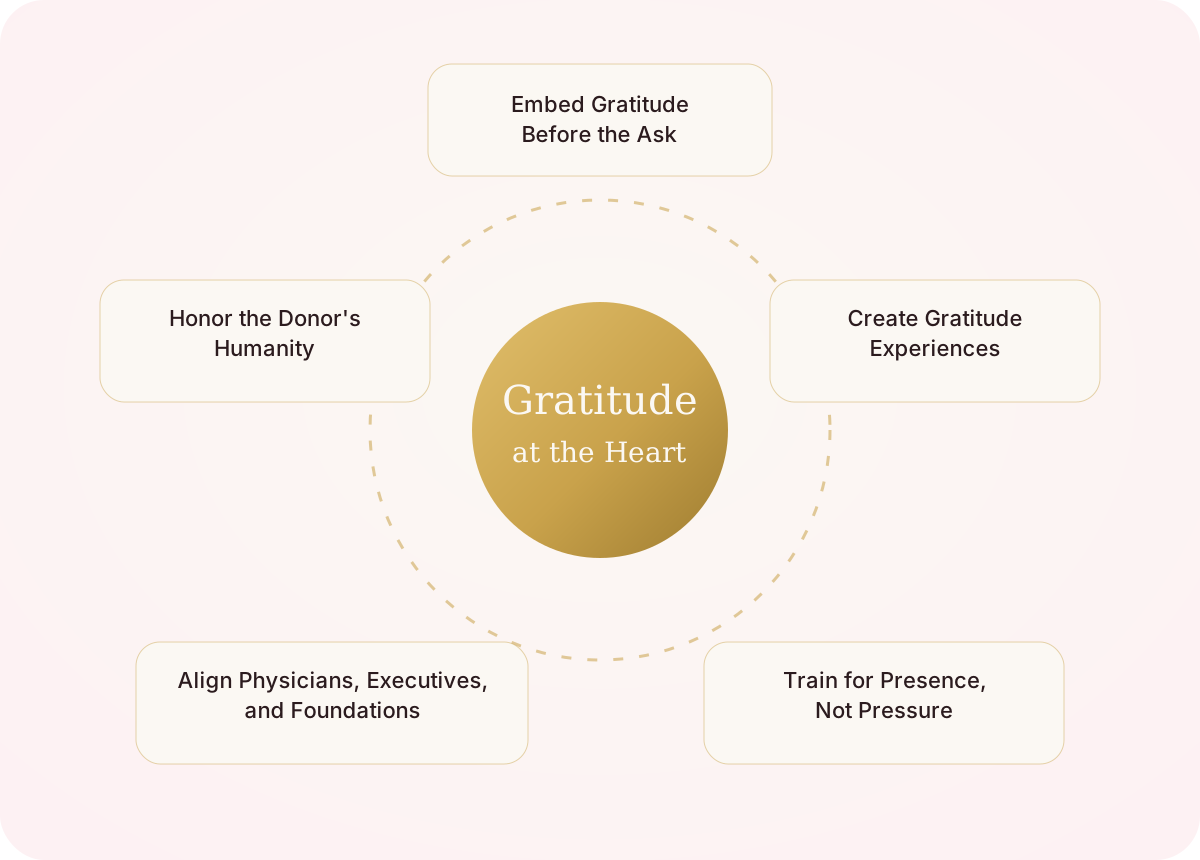
Together, these practices shift us from transactional fundraising to relationship-driven engagement.
Putting the Model into Practice
Start with Physicians
If you work in healthcare philanthropy, you've likely heard: "Our physicians won't engage."
In my experience, the issue is rarely willingness — it's trust.
I changed my approach by stewarding physicians first. I thanked them. I showed up in their departments. I recognized their teams.
Over time, trust formed.
One physician who initially declined any involvement became a champion — not because she was asked, but because she understood that this work was about honoring care.
I also use what I call the Rule of 30s:
- 30% are ready to engage
- 30% are observing
- 30% may never engage
Focus on the middle group. When they see integrity and impact, they move.
Ask Better Questions
Gratitude-led conversations are different. I often ask:
- "What stands out most about your experience?"
- "Who made the greatest difference for you?"
- "What would you want another patient to experience?"
These aren't fundraising questions — they're human questions.
They reconnect people to meaning, and meaning is what inspires giving.
Expand Who You Steward
One of the most meaningful gifts I've been part of was a $500,000 first-time gift honoring nursing staff.
Time and again, donors tell me it was the nurses who made the difference. When we steward caregivers with the same intention we bring to donors, we unlock deeper, more authentic philanthropy.
Why This Matters Now
The future of philanthropy will be defined by trust.
Donors are looking for authenticity and alignment. Transactional approaches won't sustain long-term relationships.
Gratitude-led philanthropy supports:
- Stronger donor retention
- Better physician alignment
- More ethical grateful patient programs
- Reduced burnout among development teams
Most importantly, it brings us back to the purpose of this work — a human exchange grounded in care.
A Call to Lead Differently
Gratitude doesn't replace strategy — it strengthens it.
When gratitude leads, philanthropy follows.
Author bio: Kathleen Patrick, CFRE is a former PICU nurse, Certified Nurse Life Coach, and healthcare philanthropy executive who has raised more than $100 million across twenty-five years. She advises hospital foundations on grateful-patient programs and coaches the people who carry healthcare.